

Speakers

Hendrik Haase
Cocoa beans assessed by algorithms before a human hand touches them. Harvests predicted by AI before they happen. New products developed from data rather than a product developer’s gut feeling. Artificial intelligence is transforming the food industry faster and more profoundly than most companies realize. Hendrik Haase cuts through the hype, maps concrete applications across the entire value chain and delivers a clear-eyed outlook on what this means for businesses in the cocoa and chocolate industry right now.
Hendrik Haase is a communication designer, consultant and food activist. He works at the intersection of the food industry, digitalization and social change, advising companies, associations and institutions that want to understand how their sector is reinventing itself. As the author of “Food Code” and editor of the Digital Food Report 2025 – an annual analysis of the digital transformation in one of Europe’s largest and most demanding food markets – he combines deep industry knowledge with an outsider’s perspective. His keynotes cut through the noise: grounded in data, shaped by practice, and designed to leave audiences with a clearer picture of where their industry is actually heading.
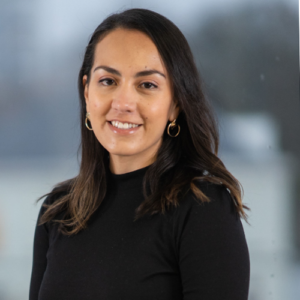
Melania Calderon
Innova Market Insights
Changing consumer expectations, including new interpretations of indulgence, value and wellbeing
Key product innovation trends influencing flavors, ingredients, textures, formats and positioning
Emerging consumption occasions and experiences creating new opportunities for chocolate
What’s next for chocolate innovation, translating consumer and market trends into future opportunities
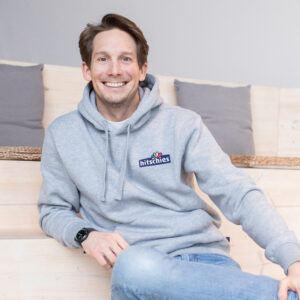
Philip Hitschler-Becker
Hitschler International GmbH & Co. KG
He shares insights into his role as a brand ambassador, explains what truly makes a product “Instagrammable,” and highlights the key lessons the industry can learn from these experiences: speed, courage, and the consistent integration of community insights into the innovation process.
At the age of 29, Hitschler-Becker took over the management of the family business. Prior to this, following the death of Walther Hitschler in 2010, the company had been led by external managers for seven years. Since assuming leadership in November 2017, he has driven significant changes within the company. Under his direction, the business has strengthened its presence on social media and, in 2021, rebranded from Hitschler to hitschies.
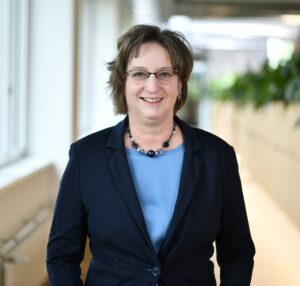
Dr. Heidi Lankes
HALBA, Division of Coop Cooperative
Food waste reduction in complex production environment
Heidi Lankes is Head of Development and Technology and Packaging Technology at HALBA, Division of Coop Cooperative. Her interests have always been chocolate, technical solutions, technology and innovation. Sustainability is a key focus for her, and sustainable production begins in product and packaging development.
Heidi Lankes studied food technology at the Technical University of Munich, Weihenstephan campus. She obtained her doctorate at the Chair of Process Engineering, specializing in powder technology. Since 2002, she has held various roles in the field of chocolate production, engineering and maintenance, initially at Kraft Foods/Mondelez, and since 2017 at HALBA.

Thomas Vanderstappen
Barry Callebaut
During this talk we will have a look at the Cocoa Futures prices evolution and the London Terminal Market. We will discuss latest movements, trends and outlook. Next to that, we will talk about the supply side of cocoa, what’s going on in the origins? Afterwards we will tackle the demand side of cocoa to conclude with an overall view of demand & supply.
Thomas Vanderstappen is an expert in the field of cocoa market dynamics with respect to the hedging of cocoa futures, beans differentials & Butter ratio’s. He has a track record of over 11 years for Barry Callebaut, world’s leading manufacturer of high-quality chocolate and cocoa products.

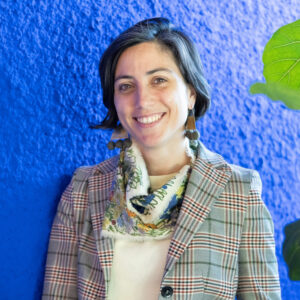
Martina Gaebler
GISCO (German Initiative on Sustainable Cocoa)
Nicoletta Lumaldo
SWISSCO (Swiss Platform for Sustainable Cocoa)
Nicoletta Lumaldo, Deputy Managing Director of the Swiss Platform for Sustainable Cocoa, is passionate about bringing people together and collaborating for greater collective impact. She has a diverse background in NGOs, the United Nations, government, higher education, and consulting. After a Lic. In Political Science, she specialised in Gender and holds a Master in Public Management and Policies.
Martina Gaebler has been Executive Secretary of the German Initiative on Sustainable Cocoa (GISCO) since November 2023. GISCO is a multi-stakeholder initiative bringing together government, industry, retail and civil society to promote sustainable cocoa production. Prior to this role, she worked as advisor and project manager for the German Development Cooperation in Germany and abroad, gaining extensive experience in sustainable agricultural value chains and international cooperation. In her current position, she leads the organization’s secretariat and works with members to advance sustainability goals in the cocoa sector. She holds a Master of Arts in International Development from the University of Manchester, UK.
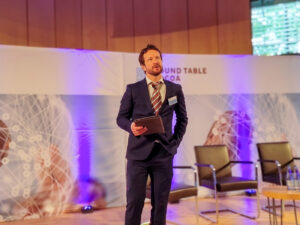
Dr. Daniel Kadow
August STORCK KG, DE
Since 2013, he has been working at August STORCK KG in Chocolate Research & Development, where he is responsible for cocoa research. Daniel Kadow is also the current Chair of the Joint Cocoa Research Fund of CAOBISCO and ECA, and serves as Program Director of the Cocoa Round Table Hamburg.
Dr. Isabell Rothkopf
Fraunhofer IVV, Freising
Dr. Yuantong Zeng
Bühler AG
This study investigates the crystallization behavior of cocoa butter in the presence of foreign fats and visualizes it using BCI measurements.
Since 2000, he has worked at Bühler AG as a senior process engineer. He developed the Seed-Crystallization Process for chocolate tempering and invented the BCI-Method for determining the crystallization behavior of cocoa butter, cocoa mass and chocolate.
His research work also covers wet grinding processes using ball mills and colloid mills.

Leif Seidel
DIL Deutsches Institut für Lebensmitteltechnik e. V.
The behavior of some selected sucrose alternatives and milk powder alternatives during the grinding with ball mill and roll refiner was investigated. The size distribution and shapes of the particles ground in cacao butter as well as their agglomeration and fat immobilization properties were analyzed. Those results were compared to the rheological properties of the suspensions and the composition and mechanical properties of the raw materials.
Since 2025, he has been working as a research associate at the German Institute of Food Technologies (DIL), focusing on the fine milling of alternative chocolate raw materials.
Fouad Lilabadi
Jupiter Pistachios GmbH
With deep expertise in origin, quality, processing, and supply chain requirements, Jupiter offers a wide range of pistachio products for the food industry, including inshell pistachios, kernels, chopped pistachios, pistachio paste, flour, and tailor-made pistachio solutions in both conventional and organic quality.
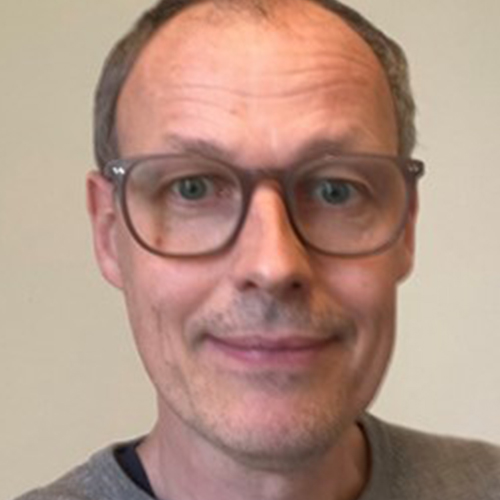
Dr. Morten Daugaard Andersen
AAK Denmark, DK
Since 2024, cocoa butter prices have experienced unprecedented volatility, fluctuating from approximately 5,000 to 42,000 EUR/MT. Such market instability has significantly affected confectionery manufacturing costs and challenged traditional purchasing and production planning strategies. Consequently, chocolate manufacturers are increasingly exploring Cocoa Butter Equivalents (CBEs) as alternatives to cocoa butter.
CBEs are specialty vegetable fat systems designed to partially or fully replace cocoa butter in confectionery applications. They are typically produced from blends of palm oil fractions and selected exotic fats such as shea, sal, kokum, mango kernel, or illipe fat, with shea and palm-based CBEs being the most widely used. A key requirement for successful cocoa butter replacement is high compatibility between the CBE and cocoa butter to ensure similar processing characteristics and overall confectionery product functionalities such crystallization behavior, sensory properties, and bloom stability.
Beyond providing an alternative source of cocoa butter-like functionality, CBEs can be tailored to deliver enhanced functionality compared with cocoa butter alone, including improved heat resistance, increased resistance to migration-induced fat bloom, and optimized performance for enrobing applications for recipes with a high CBE content.
This presentation will explore the role of CBEs in today’s confectionery industry and discuss how modern CBE solutions can help manufacturers address both economic challenges and product performance requirements.
Principal Research Scientist, Chocolate Confectionery Fats
AAK AB
The fat composition is king in fat-continuous confectionery!
Ever since starting at AAK AB in 2007 Morten’s work has focused on improving the understanding of the triangular cross field between the fat phase, the performance on the confectionery production line and the micro and macro-scale properties of the confectionery application. These insights have been and are the cornerstones in our aim to bring value to the confectionery industry. As a global developer for confectionery solutions, Morten has been part of the development of nominated and award-winning confectionery solutions.
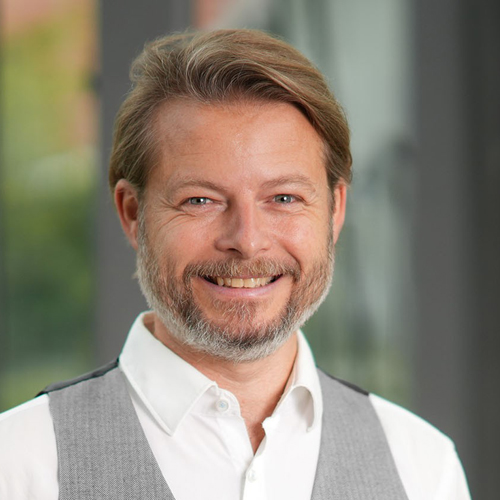
Christian Zacherl
Fraunhofer-Institut für Verfahrenstechnik und Verpackung IVV
The content of my presentation will cover the following points:
- Overview of plant-based raw materials and proteins
- Extraction
- Functionality, nutritional value, sensory properties
- Application potential
- Methods for incorporating proteins into chocolate and bar products
- Quality, acceptance, and potential
Christian Zacherl studied Food Technology at TUM Weihenstephan. Since 2006 he works at Fraunhofer IVV and gained in the past time plenty of experience in the area of food reformulation towards healthy and sustainable plant-based foods. He led various research projects facing topics such as salt-, fat- and sugar-reduction and protein- & fibre-enrichment, as well as the development of dairy and meat alternative products.
Currently Christian is active as Business Development Manager Food and acts hereby as bridge between the industry and the applied research and development, initiating cooperation and joint projects.

Noémi Weiss
Food Brewer AG
Chocolate Without Cocoa? Designing Flavor from Scratch
As cocoa supply faces increasing pressure, new technologies are redefining how chocolate can be made. From pea-based systems to cultivated cocoa, the question is no longer if we can recreate chocolate—but how authentic it can taste. This session explores the technological foundations of next-generation chocolate, focusing on fermentation, process design, and novel ingredient systems.
Noémi Weiss studied Life Sciences with a focus on Biotechnology at the Zurich University of Applied Sciences (ZHAW). During her studies, she gained hands-on experience in cell culture techniques, working with plant, mammalian, and microbial systems.
Since 2023, she has been working at Food Brewer, where she currently holds the position of Lead Scientist. Her work focuses on the development of cell-based cocoa and coffee products, ensuring sensorial excellence in commercial applications. In addition, she has contributed to the flavour portfolio of Food Brewers plant-based solutions for cocoa-like applications, delivering high-quality, scalable ingredients for B2B partners.

Dr. Christian Klein
UMYNO Solutions GmbH
In this keynote, Christian demonstrates how artificial intelligence is bridging the gap between trend detection and product readiness. Discover how AI‑powered approaches accelerate recipe development, predict sensory profiles, and radically shorten the path from the first idea to the store shelf.
In 2020, Christian started building the UMYNO Suite, a SaaS platform designed to apply artificial intelligence and automation to beverage and food product development. He founded UMYNO Solutions in 2022.
Christian holds a Diplom‑Betriebswirt (BA) degree from Frankfurt, earned a triple‑accredited MBA, and completed his doctorate in England. Since 2016, he has been a lecturer at the private FOM University of Applied Sciences in Frankfurt am Main and was appointed Professor of General Business Administration, with a focus on Marketing and Digital Media, in 2022.
Till Bäumer
Sollich KG
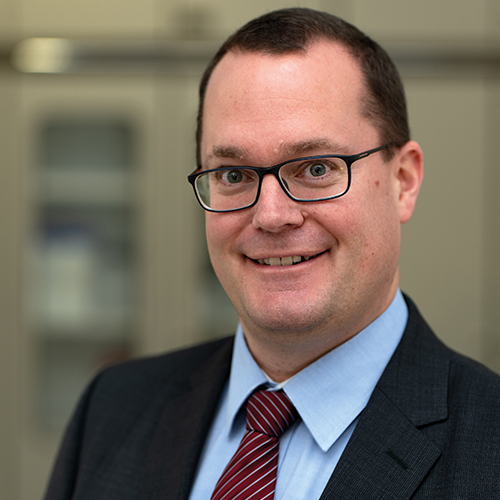
Dr. Frank Heckel
Lebensmittelchemisches Institut (LCI) des Bundesverbandes der Deutschen Süßwarenindustrie e.V., DE
Regulation (EC)3190/2024 bans the use of Bisphenol A (BPA) in certain materials and articles intended to come into contact
with food. Chocolate moulds made from polycarbonate are directly in scope of the regulation. A transition period until January 2028 allows polycarbonate moulds to be produced until January 2028 and sold until January 2029. After that, new moulds must be produced with BPA-free polymers. The presentation summarizes the activities organized by the Association of the German Confectionery Industries e. V. (BDSI) with its Food Chemistry Institute (LCI) to identify and test alternative polymers in industrial chocolate production environment. It furthermore gives an insight into the current regulatory development at European level.
Your Content Goes Here
Dr. Frank Heckel is a state-certified food chemist and received his doctorate from the University of Würzburg. After a short time in a commercial laboratory, he was responsible for the areas of migration analysis, safety and quality at a well-known packaging manufacturer for 12 years. Since 2018 he works for the Association of the German Confectionery Industries and became director of its Food Chemistry Institute (LCI) in 2019.
His research areas include food safety with the focus on (process) contaminants, but also food quality, always with special attention on reliable and valid instrumental analysis. With regards to food matrices, he mainly deals with cocoa, chocolate, fine bakery wares, ice cream, confectionery and savoury snacks.
He is member of the board of the German Cocoa Foundation, the BfR Commission for contaminants in the food chain and the board of the Food Chemistry Society. In his position as director of LCI, he is member of several mainly food safety related scientific advisory boards and working groups in Germany and on European association level, namely FoodDrinkEurope, CAOBISCO (the Association of Chocolate, Biscuit and Confectionery Industries of Europe), ESA (the European Snacks Association) and the Food Federation Germany.
Robin Pöstgens
Lebensmittelchemisches Institut des BDSI e. V.

Prof. Koen Dewettinck
Ghent University / Cacaolab bv
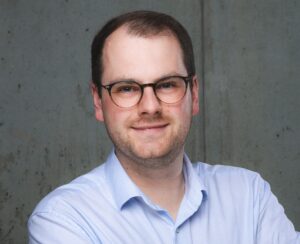
In this presentation, we explore how oscillatory rheology, both small-amplitude (SAOS) and large-amplitude (LAOS), combined with tribological measurements can provide deeper insights into the structure–function relationships of fat-continuous suspensions. SAOS is used to probe linear viscoelastic properties related to particle network strength and fat crystal structuring, while LAOS reveals nonlinear deformation and yielding behaviour relevant to oral breakdown. Complementary tribological measurements, performed under conditions mimicking tongue–palate contact, provide information on lubrication regimes associated with perceived smoothness and coating.
By integrating these methods, we demonstrate how rheological and tribological fingerprints can be linked to key sensory attributes during consumption. This approach offers a powerful framework for formulation optimization, enabling the design of chocolate and filling systems with tailored mouthfeel while supporting process and ingredient innovation.
Prof. em. Dr. Erich Windhab
ETH Zürich / CHoNova AG
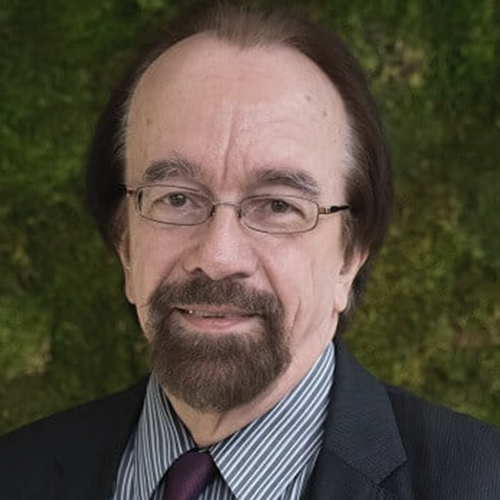
Cocoa is a cornerstone agricultural commodity, yet current processing practices leave a significant share of the cocoa fruit underutilized, representing both a missed economic opportunity and an avoidable environmental burden. Cutting-edge innovations developed by ETH Zürich, CHoNova AG and KOA AG can now be employed to convert previously discarded pod components into nutritious, affordable food ingredients, while simultaneously reducing waste and creating new revenue streams for farmers and local processors. Technological insight will be given to the processing of high quality “Whole Fruit Chocolate” and its technofunctional properties, including the tempering, molding, crystallization/solidification and demolding characteristics under authentic processing conditions.
(Authors: Johannes Burkard, Frédérique Delahaye, Erich Windhab):
The DetachLog technology, developed at ETH Zürich and CHoNova AG, uses Ultrasound Damping Spectroscopy to reveal chocolate structure formation kinetics from tempering to demolding. Both off-line laboratory and in-line mold-mounted versions monitor ultrasound amplitude damping, local temperature, and 3D acceleration/rotation throughout the molding process. For filled chocolate products, shell formation and filling structuring are reliably tracked across even complex molding-line configurations, with reproducible structure formation patterns observed in both shell forming and filling phases. During rotating shell forming, characteristic sloshing flow patterns are detected and compared with simulations to optimize shell wall uniformity. Vibration is shown to critically extend shell-forming flow duration. Cold-forming and frozen-cone processing reveal analogous but accelerated structuring mechanisms, supported by physics-based modeling.
Andrew Moriarty
Expana
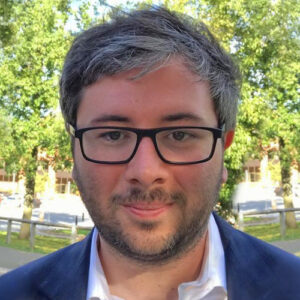
However, the main structural production problems in West Africa were not addressed during that period, and weather risks may amplify the risk to supply in the current year.
Cocoa Swollen Shoot Virus (CSSV) continues to spread unchecked, farm maintenance has hit record lows, and delays in payments to farmers as well as higher input costs and a lack of fertiliser use mean that yields remain very poor. If demand increases substantially from its 2025 lows, the cocoa market may again find itself facing production shortfalls.
Manuel Höhener
Bühler AG
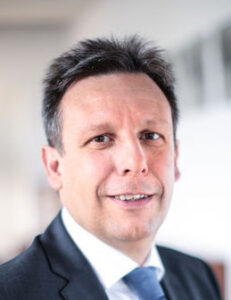
• The current relevance of AI for the chocolate industry
• Potential fields of application in process, quality, and production-related activities
• The importance of data, measurement, and process understanding as a foundation
• Technical and practical limitations of current AI approaches
• Risks, expectations, and a realistic view of the road ahead